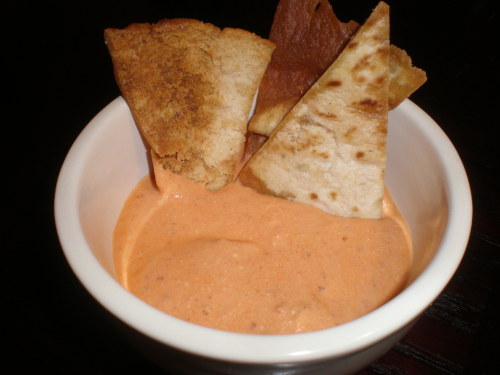
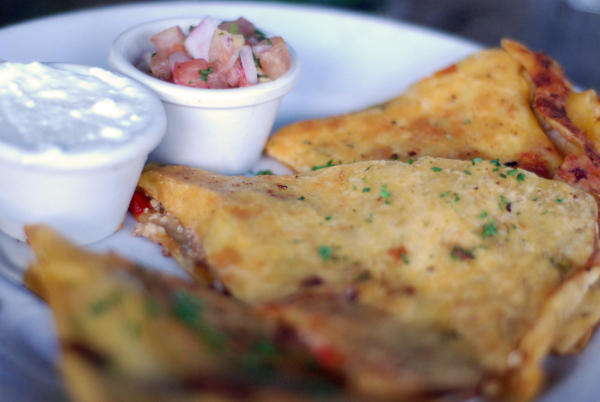
Healthy, easy, and delicious.  Party snacks need to be more salubrious and we need options with more pizzazz; this delivers on both.  The smidge of raw garlic goes a long way, tamed by the cool yogurt, and balanced by the sun dried tomatoes.  Feta adds body and saltiness.

The Dip:

Everything is going to be blended, so a coarse chop is fine. 

  • 1 whole Roasted Red Bell Pepper
  • 1/2 cup of plain yogurt
  • 1/3 cup of crumbled Feta
  • 1/4 chopped walnuts
  • 1 Tbs of chopped sun dried tomato (packed in oil)
  • 1 tsp chopped garlic
  • juice of 1/2 lemon
  • pinch of black pepper 

Toss into blender and puree until smooth.


Pita Chips:

Cut 3 pita rounds into 8ths and pull apart the halves of each triangle (whole wheat pita makes a healthier option).  Toss with about 2 Tbs olive oil, 1 tsp salt, 1/2 tsp ground black pepper, and 1/2 tsp ground cumin (adjust to taste).  

Bake on a sheet pan at 350F until nice and toasty, about 10-15 minutes.

Keep the dip refrigerated and in an air tight container for up to three days.  The pita chips in a zip-top bag will remain crispy at room temperature for up to four.  Enjoy!

Posted
AuthorAmy Koch
CategoriesRecipes

Homemade Buttermilk Biscuits with BBQ pulled Turkey - photo by my amii

I really wanted to make Pulled BBQ Turkey for a healthier option to pulled pork.  However, I looked all over the internet and could not find a recipe which I wanted to imitate.  I've made Emeril's BBQ Pulled Pork before, which turned out great, so I used the same principles (specifically, the wet basting sauce) and incorporated them into my own turkey version.

Pulled Turkey with Homemade BBQ Sauce

3-4 lb turkey breast, on the bone with skin
2 tsp salt
1 tsp pepper
1 tsp paprika
1/2 tsp cayenne

Wet Basting Sauce adapted from Emeril Lagasse 
1/2 cup white vinegar
1/2 cup apple cider vinegar
1 T red pepper flakes
1 T salt
1/2 T pepper

Barbecue sauce
3 T butter
1/2 of a yellow onion, finely chopped
1 tsp garlic, chopped
1/2 cup ketchup
1 cup apple cider vinegar
2 T Worcestershire sauce
3 T brown sugar
3 T mustard powder
2 tsp smoked paprika
1/4 tsp cayenne
1 cup water
1 T tomato paste


Preheat oven to 300 degrees.

Place the seasonings for turkey (salt, pepper, paprika and cayenne) in small bowl.  Rub spice mixture on turkey - be sure to rub under the skin while leaving skin in tact. Let marinate for 30 minutes.

Prepare wet basting sauce:  Combine vinegars, red pepper flakes, salt and pepper and whisk to combine flavors.

Barbecue sauce: Saute onions in butter until soft, add garlic and sauté for 30 more seconds.  Add ketchup, cider vinegar, brown sugar, Worcestershire, mustard powder, paprika, cayenne, water and tomato paste.  Let simmer for 30 minutes. Puree with blender (emersion or regular), and add back to pot. Taste and adjust seasonings.  NOTE: This sauce is a sweet style barbecue.  If you prefer a spicier sauce try adding 1 T chipotle in adobe sauce to mixture while simmering.

Place seasoned turkey in a baking dish and cover with foil. Roast in oven for 20 minutes, then baste with wet sauce, continue basting every 20-30 minutes.  Slow roast turkey for about 2 hours. Once cooked, remove turkey to cutting board and let cool. Discard skin and bones and shred turkey meat.  Pour prepared BBQ sauce over shredded meat.

Serve on buns with pickles and coleslaw.

Serves 4

Posted
AuthorAmy Koch
CategoriesRecipes
2 CommentsPost a comment

photo by Kristin Brenemen

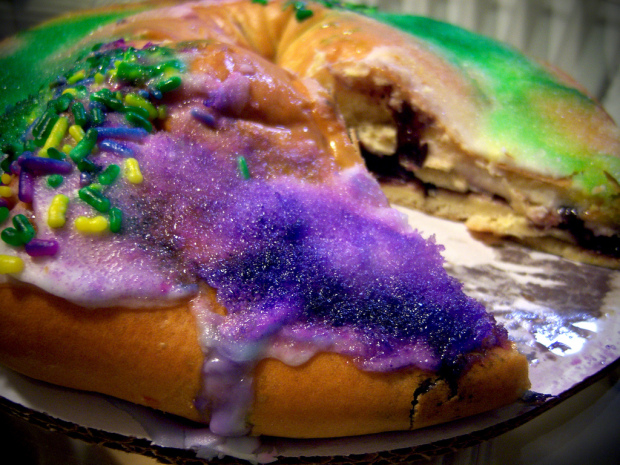
Fat Tuesday is right around the corner and I'm hearing more and more about King Cake.  A  friend of mine in college, Lucas, was from New Orleans and my first experience with King Cake was when his mom sent him one all the way to our dorm in California to celebrate.  

I was the lucky guy who found the little plastic baby inside.

Lucas had failed to mention there was a choking hazard buried in there...

Thank God no one was hurt or killed but it got me wondering, has anyone died from King Cake?

I dug and dug through the internet and although I couldn't find anything conclusive - that doesn't mean it hasn't happened.  I did; however, find that Mochi [the squishy marshmallow-like Japanese rice cakes] seem to kill a few elderly people each year during New Years in Japan.  

No way.  Really?  

Really.

This Associated Press clipping claims four elderly Tokyo residents died in the first two days of 1996 while choking on Mochi, and that the rice cakes had claimed the lives of five more in the first three days of 1995 as well.

In 2000 - Elderly choke on year end delicacy

In 2001 - 'Mochi' claims three more elderly

In 2007 - Four choke to death on 'mochi'

From the Japan Times, "According to data compiled by the health ministry, 4,407 people died by choking in 2006. By age, about 85 percent were over 65... By type of food, "mochi" pounded rice was the top culprit."  Again, I couldn't find any hard data but I'm starting to think that Mochi kills more people each year than sharks!

Whether it is the baby in the King Cake or a scrumptious ball of delicious yet deadly mochi, if something goes awry - and the Heimlich fails - you can always try the vacuum like this woman successfully did, Daughter uses vacuum cleaner to save dad's life (via Japan Times).

Happy Fat Tuesday!

Posted
Authordavid koch

From National Geographic comes The Green Guide; and like the magazine, the website is visually fantastic.  Specifically, their Food Section has topics on how to stay green when Buying, Cooking, and considering food Safety & Storage.  Right now, the Buying section offers up a guide to some of the new-ish labels you may have noticed appearing on your beef's packaging.  

What do they all mean?  Check out their Beef Label Decoder to find out more or click on each of the labels that you see below:


USDA OrganicUSDA Process Verified


Food Alliance Certified


American Grassfed


Certified Humane


Animal Welfare Approved


Posted
Authordavid koch

A recent study published in the Annals of Internal Medicine showed that some of the commonplace recipes in the ubiquitous Joy of Cooking have seen calorie contents skyrocket from its first publication in 1936 to its 75th Anniversary Edition published in 2006.

From WebMD:

"Wansink and Payne reviewed seven editions of The Joy of Cooking, looking for recipes published in each edition (printed in 1936, 1946, 1951, 1963, 1975, 1997, and 2006).

Only 18 recipes qualified: chicken gumbo, corn chowder, plain omelet, Spanish rice, chicken a la king, goulash, biscuits, blueberry muffins, cornbread, brownies, sugar cookies, rice pudding, tapioca pudding, baked macaroni, waffles, apple pie, chocolate cake, and chili con carne."

17 of the 18 recipes analyzed showed an increase in calories per serving, and the average increase was by a whopping 63%.  The gains were found to be from a variety of reasons in addition to an increase in the size of the portions: extra meat, more butter, more sugar, or adding nuts and raisins.

Oh.  

Who wouldn't want more butter, sugar, and extra nuts and raisins?

In that case, then I agree with Beth Wareham, editor of the 2006 edition and quoted by The LA Times: "It's such a tiny number of recipes. It's really a non-event,"

The authors of the report are Collin Payne, an Assistant Professor of Marketing at New Mexico State University in Las Cruces and Brian Wansink, Director of Cornell University's Food Lab.

Posted
Authordavid koch
2 CommentsPost a comment

photo by v.max1978 

Somewhere between 1,600 and 1,900 years ago a cook book was written titled, “De re Coquinara” (Concerning Cookery) and attributed to a Roman gourmet named Apicius.  Although there are records in China dating thousands of years earlier, including a 9,000 year old recipe for beer, this may be the first cookbook in Western culture. 

It contains some very strange entries, from the article Pluck a Flamingo (The Economist):

"There are recipes for ostrich and flamingo, befitting the sweep of the Roman Empire. Apicius instructs cooks to add honey to almost everything, including lobster. He teaches them how to cook one dish so that it resembles another and how to disguise bad food.

One recipe explains that stale birds should be cooked in a sauce of pepper, lovage, thyme, mint, hazelnuts, dates, honey, vinegar, liquamen (fish sauce), wine and mustard. Through that concoction it would be impossible to detect a stale smell, or indeed any smell at all."

Some of the dishes in the text include:


  • Boiled Ostrich

  • Treatment of Strong Smelling Birds of every Description

  • Another Treatment of Odor

  • Sauce for Partridge, Heath-cock and Turtle-dove

  • Julian Meal Mush
  • Lentils and Cow-parsnips

  • Peas Supreme Style

  • Spayed Sow's Womb

  • Stuffed Sow's Belly

  • Another Way to Cook Lung


"An Every-day Dish" (Patina quotidiana #142)

"Pieces of cooked sow's udder, pieces of cooked fish, chicken meat and similar bits, mince uniformly, season well and carefully.  Take a metal dish for a mould. Break eggs in another bowl and beat them. in a mortar put pepper, lovage and origany, which crush; moisten this with broth, wine, raisin wine and a little oil; empty it into the bowl with the beaten eggs, mix and heat it in the hot water bath.

Thereupon when this is thickened mix it with the pieces of meat. now prepare alternately layers of stew and pancakes, interspersed with oil in the metal mould reserved for this purpose until full, cover with one real good pancake cut into it a vent hole for chimney on the surface bake in hot water bath and when done turn out upside down into another dish. Sprinkle with pepper and serve."

Sounds delicious.

A translation of the entire “De re Coquinara” can be found here.


Posted
Authordavid koch
CategoriesHistory

photo by lombardo_uk

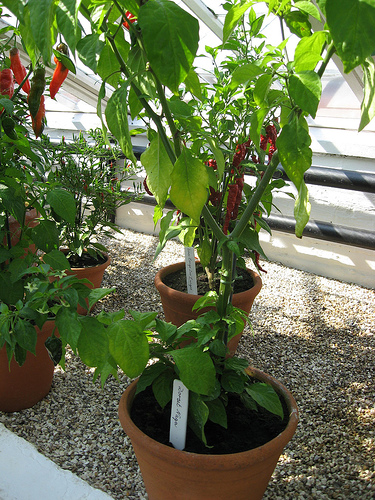
With the global trend of food becoming spicier and spicier, also comes the cultivation of hotter and hotter chilies.  Common household names like the Tabasco, jalapeno, and habanero may be ubiquitous but heat-wise, some new cultivars make even the habanero squirm. 

From Wikipedia: "The "heat" of chili peppers is measured in Scoville units (SHU), which is the amount of times a chilli extract must be diluted in water in order for it to lose its heat. Bell peppers rank at 0 SHU, New Mexico green chilies at about 1,500 SHU, jalapeños at 3,000–6,000 SHU, and habaneros at 300,000 SHU."

Until recently, the hottest pepper recognized (by the Guiness Book or Records, no less) was the Naga Jolokia, coming in at over 1,000,000 SHU.  This is incomprehensibly hot.  To put this in perspective, pepper spray is 2,000,000 SHU. 

Enter the Dorset Naga.  Developed by a mail order chili pepper grow house in the UK called Peppers by Post, the preliminary findings from labs testing the heat of the Dorset Naga is astounding.  Some have rated it as high as 1.6m SHU.  That's more than 5 times hotter than the habanero and approaching levels which are used as non-lethal weapons.

In a great article about chilies in The Economist titled "Global Warming", they quote the owner of Peppers by Post Michael Michaud,  “I sent the powder to a couple of labs. They didn’t believe the reading. They thought they had made a mistake.”

There are several videos online of people trying to eat the Dorset Naga.  Check them out, some are hilarious.

Posted
Authordavid koch
CategoriesScience
2 CommentsPost a comment
Posted
Authordavid koch
CategoriesLinks

photo by architekt2

If Ettore Boiardi only knew what ConAgraFoods was doing with his name (albiet Americanized) he would likely not approve.  The story of Boiardi (from Wikipedia):

"The Chef Boyardee product began when its founder, Ettore Boiardi, founded an Italian restaurant, Giardino d'Italia, at East 9th Street and Woodland Avenue in Cleveland, Ohio.  People began asking Ettore for his recipe and samples of his ingredients, and as demand grew he opened a factory in 1928 to keep up with orders.

Ten years later, he moved his factory to Milton, Pennsylvania. When his product began mass-distributing, he decided to name his product "Boy-Ar-Dee" to help Americans properly pronounce his name."

I'm all for getting creative but with reagards to food, a line needs to be drawn where children especially begin to become alienated from what they're actually eating.  How is a 6 year old suppose to draw the conclusion that his pasta dinosaurs came from a field of Semolina?

Here are some of the more off-the-wall products with the Chef Boyardee label on them:

ABC's 'n 123's Mini Meatballs - Nothing says delicious like food shaped like letters and numbers. 

Beefaroni - I have nothing to say about this one.

BIG Beefaroni - A bigger version of the previous entry that made me speechless.

Cheesy Burger Macaroni - I like cheeseburgers AND macaroni; however, I don't think they should be stuffed into a can together.

Cheesy Burger Ravioli - Same "two dishes, one can" rule applies for ravioli.

Chili Cheese Dog Twistaroni - A new pasta appears here, the twistaroni, not to be confused with Fusilli.

Dinosaurs with Mini Meatballs - There's nothing quite like a perfectly al dente dinosaur.

Mini Bites Micro Beef Ravioli - I prefer my Micro Beef meduim rare.

Mini Bites Mini Ravioli with Mini Meatballs - Perfect for jockeys?

Nacho Cheese Twistaroni - The twistaroni with a Mexican... twist?  Pun intended.

Pepperoni Pizzazaroli - Ahh, the Pizzazaroli.  Don't confuse this with Pizzoccheri.


Posted
Authordavid koch
CategoriesHistory, Humor
3 CommentsPost a comment

I recently discovered The Hard To Find Grocer's online store where you can revisit those sometimes-odd tastes from your childhood.  I've been perusing the virtual aisles and been finding all sorts of goodies worth trying.  What immediately intrigued me was Aisle 8: Canned Meats, Canned Pasta, Chili, and Soups.

I was hoping to find one regional favorite close to my heart, Cincinnati Chili.  Having never heard of it before, my wife introduced me to Cincinnati Chili in my early 20's - which is a beef sauce made with pie spices (cinnamon, nutmeg, allspice, etc.) and poured over spaghetti.  Once the novelty wears off, it can be pretty good when done right.  

Although they don't have any "Cinici Chili", they did have some other fun stuff.  So without further adieu, let's check out what The Hard To Find Grocer has to offer on aisle 8: 


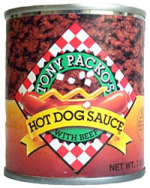
Tony Packo's Hot Dog Sauce with Beef - "The authentic sauce that tops the Hungarian dogs at Tony Packo's in Toledo - made famous by Corporal Klinger of M*A*S*H* fame in the mid-70's. Tony's original recipe remains a closely held secret!" - Maybe Jimmie Hoffa got whacked by Tony Packo and ended up in a can of hot dog sauce...


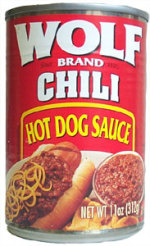
Wolf Brand Hot Dog Sauce - "The Original Wolf recipe was developed in 1895 by a Texas ranch cook. Sold in Corsicana, TX in front of the Blue Front saloon for 5 cents a bowl, it soon became a hit! This unique blend of spices, seasonings and lean cuts of beef has flavored the lives of generations." - This looks a lot like Cincinnati Chili... or the dog got sick again...


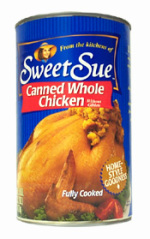
Sweet Sue Whole Chicken in a Can - "One whole chicken, ready for soups, stews and quick dinners. Great to have on hand in your pantry for emergency dinners. Sweet Sue, a division of Sara Lee." - First of all, I'm wondering how big is this can?  Secondly, I'm thinking this would be perfect for all those times when I thought to myself... I wish I had a whole chicken in a can right now...


Underwood Chicken Spread - "Begun more than 170 years ago on Boston's Russia Wharf by William Underwood. Underwood's canned foods were among staples pioneers took westward in their covered wagons. The "Underwood Devil" appeared in 1870 as a descriptive logo for the process of "deviling"(ground meat processed with special seasonings). The oldest existing trademark still stands for quality and great taste!" - If you prefer your chicken in a spreadable application, this was made just for you...


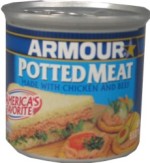
Armour Potted Meat Spread - "Delicious on crackers or for use in recipes, also creates a hearty sandwich. Convenient on the shelf or on the go!" - I like how the can's tagline is, "Made with Chicken and Beef."  Well in that case, I'll take a dozen!  The other juicy slice of advertising temptation on the label is, "America's Favorite."  Is this really true?  Is Armour brand America's favorite meat spread?  So many questions, so few answers...


Posted
Authordavid koch
CategoriesHistory, Humor


Sometimes you are working on a dish and you catch yourself tasting it over and over again, searching for that je ne sais qua - you think it needs something but you just can't figure out what.  It is usually part of the foundation that is off; maybe salt, maybe acid or pepper.  

Other times it is depth you are looking to add, or possibly the fifth taste, umami.  From the kitchn comes these Eight Ways to Build Flavor.  They are worth repeating and we've added some of our own too.  You can't have enough tricks for bringing out flavor in your repertoire.

1. Searing the Meat - When cooking meat, taking time to sear the outside will add a heavenly depth of flavor to your final dish.

2. Deglazing the Pan - That dark layer at the bottom of your pan might look like burned food, but it's actually caramelized bits from everything you've been cooking. Once they've been deglazed, these bits melt into the background and form a savory flavor base in your dish.

3. Caramelizing the Onions - Like searing and deglazing, caramelizing onions and other vegetables by cooking them slowly gives your dish depth and adds interesting smoky and nutty flavors to your dish.

4. Toasting the Spices - This brings out the natural oils in the spices and boosts their aroma in the final dish. It's most effective to toast whole spices and then grind them.

5. Reducing the Sauce - Reducing concentrates all the flavors in a sauce. High, middle, and low notes become heightened, which enhances the overall taste of the sauce.

6. Salting to Taste - Salt reduces our perception of bitterness in dishes. If you've already added all the salt called for in the recipe, try adding a half teaspoon of salt or more and then see if you notice a difference.

7. Adding acidic and spicy ingredients - These also accentuate the high notes. If you've already added salt and you still think your dish needs "a little something," try adding a squeeze of lemon, a splash of vinegar, or a few shakes of Tabasco sauce.

8. Adding a splash of wine - Similar to adding an acidic ingredient, a splash of red or white wine can brighten the flavors in your dish.


We came up with Our Own 8 Ways to Build Flavor:

1.  When you season with salt and pepper, season each layer - When you start with the onions, season.  When you add the carrots, season again.  When you add the potatoes, season again.  

2.  Bacon - This adds a layer of smokiness and saltiness along with pure unadultered porky goodness.  Few dishes do not improve with the addition of bacon.

3.  Zest - The zest of citrus adds a piquant quality without actually adding acid.  Think outside lemon and lime too; a little orange or grapefruit zest can go a long way.

4.  Soy Sauce - this is a shortcut to bringing umami to the party, just keep in mind that soy sauce is also quite salty.  Soy sauce has almost the same sodium content of kosher salt by volume.  So that you don't over do it, add a touch in the beginning.  Low sodium soy sauce has on average 1/3rd less.

5.  Bouillon - We especially like the "Better than Bouillon" brand.  Keep in mind that every teaspoon adds another 250mg of sodium (or about 1/5th a teaspoon of kosher salt).  I often make vegetable soup just by sauteeing veggies, and throwing them in a pot with some bouillon.  Magnifique!

6.  Paprika - Along the flavor profile of black pepper, paprika adds a spicy, an earthy component; and if you use a smoked paprika, a smoky component too.  It also adds a bright ruddy color too which, keep in mind, may not go well with some dishes like a cream sauce. 

7.  Herbs - Adding fresh herbs right at the end of cooking or as a garnish brings bright notes and a blast of color.  Surprisingly enough, flat leafed parsley can be added to almost anything.

8. Chocolate - The cacao brings to the table an earthiness that adds a richness to savory flavor that, when used in moderation, most people cannot recognize but find delicious.  It is my secret ingredient in many of my stews and my chili; shh, don't tell anyone.

What other ways do you build flavor in your cooking?

Posted
Authordavid koch
Posted
Authordavid koch
CategoriesLinks

photo by zoyachubby

There has been a wafting smell reminiscent of maple syrup in the Big Apple lately - causing bioterrorism concerns for many.  The occurrence has happened as far back in recent memory as October 2005, the NY Times reports, and it has been so potent as to have sparked a press conference by Mayor Bloomberg (via Gothamist).  Bloomberg states, “It wasn’t exactly akin to searching for a needle in a haystack, but a smell over a very large area.”  How perspicuous.

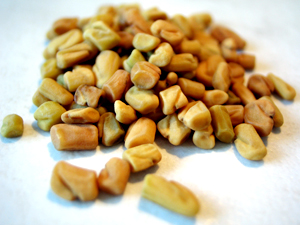
Investigators followed the scent to a  fragrance company in New Jersey called Frutarom who the Wall Street Journal's Health Blog suspects may be using fenugreek to refine a substitute for maple syrup flavor.  I only know fenugreek from Indian Cuisine, but what immediately strikes me is that fenugreek is the only spice in our cupboard that requires extra sequestering.  

Our fenugreek is not only a sealed zip-top bag, but that bag needs to be placed inside a Tupperware also in order to keep it from scenting everything in the cupboard "curry."  I suppose if there is one spice that could cross the Hudson, frighten the pants off of tens of thousands of citizens of New York City and make them think they were under attack... it would have to be fenugreek. 


Posted
Authordavid koch
CategoriesHumor, Science

Ital Cuisine photo by svacher

Today, February 6th, is Bob Marley's birthday and it would have been his 64th.  I thought today would be appropriate to investigate Rastafarian Cuisine, also known as Ital (from vital).  The Ital diet adheres to Biblical guidelines, mostly GenesisDeuteronomy, and especially Leviticus.  Ital dietary guidlines are, like anything else, open to many different interpretations.  

At it's core, Rastafarian diets are essentially composed of foods that are fresh and natural; avoiding chemicals, additives, coloring, flavoring, and preservatives.  Most Rastafarians also do not consume coffee, alcohol, cigarettes, or even Western medicines.  

Herbs, however, are GRAS (Generally Regarded As Safe: an FDA term).  Many Rastafarians are vegetarian, but those who do not abstain from all meat generally avoid pork, shellfish, and often red meat.  Those who do eat fish, generally avoid fish more than 12 inches long.

Most also take measures to avoid consuming metal.  In order to avoid metal, some Rastafarians avoid cooking and serving food in metal vessels, and some even avoid metal eating utensils.  For the same reason, some also avoid foods that have been canned.  

Many avoid preparing food with salt and/or oil.  What's left you ask?  The bulk of their diet consists of fruits, vegetables, and whole grains.  I found this recipe on Jamiacans.com:

ITAL SWEET POTATO PUDDING

Ingredients:

  • 1lb 8ozs to 1lb 14ozs sweet potato (I used 1lb 14ozs in this Pudding)
  • 3 cups coconut milk
  • ½ tsp cinnamon
  • ½ tsp ground ginger
  • ½ tsp grated nutmeg
  • 1 ½tsp vanilla essence
  • 1 to 1 ¼4 cup brown sugar
  • 2 cups soaked raisins (I have mine soaked in Sherry for over 5 years now. I top it off with more Raisins, Prunes and Sherry every time it gets too low in the bottle.)
  • ½ - 1 cup flour (More or less flour will make it firmer or less so I used half a cup)
  • 5ozs Beet Root or Carrots (optional)

Method

  1. Puree sweet potato and coconut milk in blender
  2. Pour mixture into a bowl
  3. Dice beet root
  4. Add all the ingredients to the bowl. Mix and pour into a well greased 8" or 10" round tin
    (vegetable shortening to grease the tin)
  5. Bake at 350F for 1 ½ hours then 300F for 25 mins
  6. Remove from the oven immediately.
  7. Best eaten the next day or at least 5 hours after cooking.
  • The pudding sets as it cools.
  •  

    And this book, specifically on Rastafarian Cuisine.


    Posted
    Authordavid koch
    2 CommentsPost a comment

    Following my original article Drinking Vinegars, I went and made my own "shrub" using frozen organic cherries and a bottle of Bragg organic unfiltered apple cider.  As instructed by Toby Cecchini in his NY Times article, I added the cherries to the Bragg vinegar, covered with paper towel, secured it with a rubber band, and waited... 8 days in this case.


    With the cherries, I smashed them up really good INSIDE the bag before I opened it.  The freezing process should have burst all or most of the cell walls already by the formation of ice crystals, but smashing is fun, and likely expedited the fermentation process even more.


    I found other brands besides Bragg at my local health food store, but this is made in Santa Barbara so it must be good, right?


    The bacteria responsible for making vinegar, called acetobacters, require oxygen to function.  A paper towel held in place with a rubber band should suffice for keeping other, stray bacteria and yeast from entering - while still allowing the acetobacters to boogie.  This vessel stayed at room temperature for 8 days in the kitchen.  My wife complained of the pungent vinegar smell but I liked it!

    When the 8 days were up, I strained it through a sieve and boiled it briefly to halt the fermentation where it remained.   I placed it in a glass container, covered it, and put it in the fridge.  According to Toby's article, it can remain there for up to 3 months.


    The end result is a pungent, piquant, puckering, punch that REALLY quenches your thirst.  Besides the tartness of the vinegar, there remained a good amount of cherry flavor which I thought would be gone after fermenting but it wasn't.  Full strength was way too pungent, I found myself diluting it with water 2:1 or 3:1 and sometimes adding some simple syrup out of my handy squirt bottle that sits on the counter.  The more simple syrup I added, the more of the fruit returned to the palate.  

    By putting it in a highball or similar glass, it really is like making a non-alcoholic cocktail.  What is most interesting to me is how I began to crave a glass of this after work.  I would come home and immediately go to the fridge and make myself one.   I even began to feel a little flu coming on and I still craved the Drinking Vinegar, unlike booze.

    After all is said and done, these are really fun to make, super easy, and I'm going to start experimenting with different fruits and flavors.  I suggest you do too.


    Posted
    Authordavid koch
    CategoriesDrinks


    Following Denny's Super Bowl ad offering a Free Grand Slam Breakfast today, long lines like this one in Danville, CA were ubiquitous across the nation.  

    The LA Times reports that 5 of the top 40 searches on Google Trends were Denny's related, and that in some areas the Denny's servers went down due to the heavy traffic.  Likely from people searching for their nearest location.

    Denny's stock (DENN) saw a spike from close of Wall Street Friday to the close of Wall Street today of almost 14%.   I wonder how long it will hold on to the boost.


    Posted
    Authordavid koch
    CategoriesHistory, Humor

    photo by southerntabitha

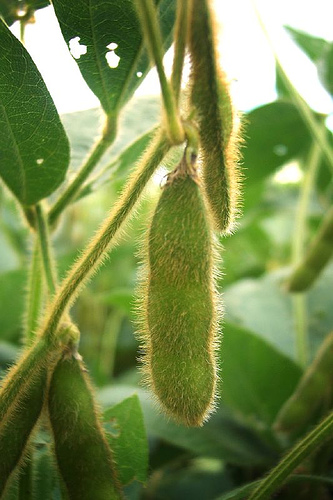
    I found this article from the San Francisco Chronicle's website, sfgate.com (via chow.com) and it so funny it is worth repeating.  SF Gate columnist Mark Morford discovered an evangelist named Jim Rutz from Megashift Ministries who is proclaiming that because soy contains estrogen-like compounds (isoflavones), it is turning society gay.

    Jim Rutz claims:

    "Research is now showing that when you feed your baby soy formula, you're giving him or her the equivalent of five birth control pills a day. A baby's endocrine system just can't cope with that kind of massive assault, so some damage is inevitable. At the extreme, the damage can be fatal.  Soy is feminizing, and commonly leads to a decrease in the size of the penis, sexual confusion and homosexuality.

    The danger zone is the first three months of both pregnancy and infancy, when male physiology and brain circuitry are still developing. In other words, a girl-chasing, football-playing college boy won't go gay even if he becomes a vegetarian or snacks all day on soy energy bars. (He might develop thyroid or other health problems or lose most of his libido, though.)"


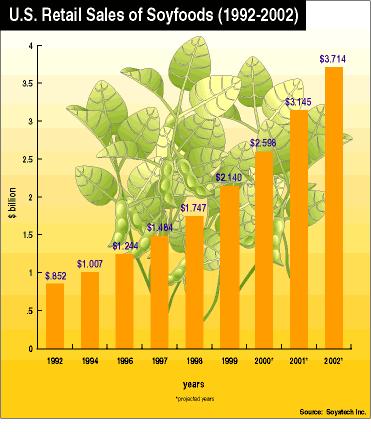
    This increase in gay must because of the dramatic increase in the sale of soy products.


    From the FDA's website:

    "The problem, researchers say, is that isoflavones are phytoestrogens, a weak form of estrogen that could have a drug-like effect in the body. This may be pronounced in postmenopausal women, and some studies suggest that high isoflavone levels might increase the risk of cancer, particularly breast cancer.

    Research data, however, are far from conclusive, and some studies show just the opposite--that under some conditions, soy may help preventbreast cancer. It is this scientific conundrum, where evidence simultaneously points to benefits and possible risks, that is causing some researchers to urge caution."

    It sounds like Jim's claims are a big helping of crazy with a dash of pseudo-science just to throw off the sent of paranoid schizophrenia.

    Check out Mark's article where he goes "nuts" on Jim (soy nuts, anyone?).  It's hilarious.  Mark rants:

    "It is no secret, after all, that the consumption of excess Girl Scout cookies -- particularly Caramel deLites -- will make you a butch lesbian. It has also been reported in lesser-known scientific journals that eating lots of organic baby greens means you want to subscribe to the New Yorker and drive a Prius and get your genitals pierced, often at the same time.

    Stay in school, kids. Stay in school and for Christ's sake please learn something lest you end up like Jim, what with his trembling hands and his spasming colon and his violent nightmares featuring giant tofu robots leading perky armies of sashaying soy-fed children, marching into his yard wielding soy lattes and Barbra Streisand records and waving gay-marriage petitions like victory flags. Shudder."


    Posted
    Authordavid koch
    6 CommentsPost a comment

    It was only about a year ago when I picked up my first copy of the magazine Real Simple and while reading it, my quick browse soon turned into a full blown peruse.  I like it.  The mag is like Martha Stewart Living only more practical and not so hoity-toity when it comes to cooking, and gardening, and well... life in general.  

    Now now, I have the utmost respect for Martha and the empire she has built, I really do.  I may be a big fan but nevertheless, it's still fun to post screenshots of her drinking an Olde English 40oz malt liquor and eating a Taco Bell burrito on Late Night with Conan O'Brien.  You can watch the whole clip here.


    Martha Stewart and a 40 of Old English "Old E" Malt Liquor


    So back to the story at hand...

    Real Simple recently did a piece online called 7 Common Cooking Mistakes and they added "What to do next time" instructions in the article.  Their original list consisted of the following:

    1. You didn’t read the recipe all the way through before you started cooking.
    2. You overcrowded the pan.
    3. You didn’t preheat the pan, and your fish fillets turned out soggy.
    4. You cooked pasta in a small pot and ended up with a pile of gummy noodles.
    5. You sautéed wet greens.
    6. You used dried herbs in a recipe in place of fresh ones, resulting in a heavily overseasoned dinner.
    7. You fried food in oil that wasn’t hot enough.


    Here are the more uncommon mistakes that I would have added:

    1. You thought it was sugar, but it wasn't.
    2. The last person to wash the blender didn't screw the bottom on tight, and you just made margaritas.
    3. You forgot to rinse your beans and now you just poured wall paper paste on your salad.
    4. You got all wrapped up playing Cranium and scorched the Thanksgiving turkey.
    5. "Baking Powder, Baking Soda... what's the difference?"
    6. "Jalapeno... Habanero, what's the difference?"
    7. You completely forgot about the rice...
    8. You fell asleep on the couch and just made a briquette from a frozen pizza...

    Feel free to add your own in the comments


    Posted
    Authordavid koch
    CategoriesHumor

    Kurobuta Tonkatsu


    I recently had the opportunity to enjoy a Kurobuta tonkatsu at a pretty authentic Japanese joint (Tonkatsu Ginza Bairin) that serves tonkatsu almost exclusively, ten different ways.  The dish set me back $35 which was at first unsettling - but I considered how many times I've spent that much or more on a fine steak and I thought to myself, why shouldn't the pig deserve as much as the cow?

    The story goes that British traders were closed off from Japan until the 1800's when they brought over some Berkshire pigs.  The Shogun prized them so much that they agreed to trade as long as they brought more of those "Black Pigs" - or "Kurobuta" in Japanese - each time they returned.

    What a great story right?  Unfortunately, I can't find anything even remotely credible to confirm or deny it, but it continues to perpetuate out of sheer romance.  Nevertheless, the "Black Pig" has more marbling, a more ruddy flesh (some call it "the other red meat"), and much more flavor than your supermarket variety pig.  

    This "leaning" of America's pigs; however, was largely done on purpose.  The market desired less fat and according to Dr. Grant Walling on thepigsite.com, the lean % of our pork has increased by more than 37% since the 1960's.  I've already alluded to the National Pork Board's slogan, "The Other White Meat," which was so successful that in 2000 that a survey by Northwestern University found it to be one of the five most memorable taglines in contemporary advertising. 

    Your sauce is made with grinding fresh sesame paste

    Before we were served, my Kurobuta tonkatsu began with a mortar and pestle to grind up some sesame seeds fresh.  To this paste, we added some of their homemade katsu sauce, and for me, a dab of hot mustard on each bite.  My cutlet had a thick piece of fat, one inch in places, running down one side and my immediate American reaction was to trim it.  I didn't, and found it do be soft like a marshmallow and tasting of the essence of delicious.

    Cleansing your palate with sake is a "must do"

    The panko added a toasty aroma, a sharp crispness, and plenty of craggles for the sauce to gain a firm grasp on.  Between bites I would eat either some plain white rice, some cabbage, or drink some sake to clear my palate - trying my best to enjoy the next morsel like it was my first.  Their sauce is amazing, like a soy based sweet and sour, it was thickened possibly with molasses or malt extract.  When we do Kurobuta tonkatsu at home, I will enjoy trying to replicate this. 

    Katsudon

    My wife didn't opt for the Kurobuta but she got Katsudon instead which is tonkatsu served over a bowl of rice with a fried egg on top.  It was unbelieveably rich and [because the grass is always greener...] I preferred her dish over mine.  The next time I'm in a katsu shop, I'm going for the Katsudon.

    Kurobuta pork is my new favorite breed of swine.  Which honestly, wasn't difficult to move into that spot because hitherto, I couldn't even name another.  Now, with a burgeoning demographic of savvy consumers, fat is hip, and Kurobuta pork delivers. In fact, you can have Kurobuta delivered.  If we can't find Kurobuta locally, we're going to mail order some.  Here are some of the vendors I found.


    Posted
    Authordavid koch