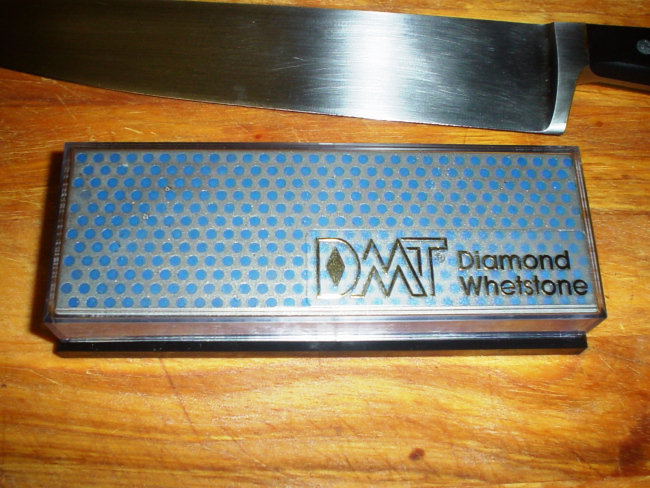
photo by Antoinne von Rimes

I am the king of procrastination and delaying the inevitable. I am constantly doing things in half measures knowing that it would be best to do things the proper way the first time. And the sad truth for me is that this weak will to do the smart thing the first time leads me to accumulate a mountain of second rate things in my life. The biggest pile of junk I have is ineffectual culinary gadgets.

And, I love gadgets, but I always tend to gravitate to the less expensive option rather than just plopping down the cash for the better quality option first. I guess, I do this because I don’t have a lot of money to plop down in the first place and I am always skeptical of how much better the expensive option can be over the cheaper alternative.

This is why I have a battalion of useless to ineffectual knife sharpeners at my house. I do not mean steels. I am referring to implements designed to sharpen your knives, but in actuality leave you with a slightly less dull version of the previously very dull knife you had. I guess in the world of cause and effect, and advertising a less dull knife fulfills the contract of a knife “sharpener”. It does not, however, produce a knife which I consider sharp.

I never thought of sharp as a subjective term, but I guess it is because to me sharp means having an implement with an edge capable (at a minimum) of slicing through meat, and vegetables. I have quality knives (Wusthuff Trident) and have tried several gadgets to sharpen them, but they all produced a slightly less dull version of my already dull knives. That is, until, I bought a Diamond whetstone ($40.00) knife sharpener from my local hardware store, and sharpened my knives with it.

Now my knives are sharp, really sharp. I’m talking Tarzan, Crocodile Dundy, throw a strand of hair into the air and slice it sharp. I do not know why I waited so long to buy a whetstone. It’s like when you make an embarrassing mistake and you are too afraid to live up to it.

Like, say, if you got really drunk one night with your wife’s kid sister, and you make-out with her in some dark bar because her mouth makes that same funny smile her sister’s used to before it started yelling at you all the time about helping around the house with dishes and laundry and stuff. And you know you should tell your wife about the whole stupid thing, but you feel that would be even worse…for you. So you don’t say anything and walk around waiting for the day that she will find out and you will be forced to confess.

Well that’s the feeling of having a drawer full of useless knife sharpeners and knowing you should buy a whetstone, but you don’t and you continue to deal, live and operate with slightly sharp knives. It’s an awful feeling. But, once you have bought the whetstone and sharpened all your knives, scissors, flatware, and anything with an edge you can get your hands on, you feel so much happier and relieved.

Kind of like how you feel right after your sister-in-law goes through her Twelve Step Program and tells your wife about that night in April of ’07, and your wife slaps you, hard, and kicks you out of the house. For that one moment as you stand looking at the neighbor’s lights go on at 2 am, and seeing them all staring at you while you stand frozen on your front lawn in your underwear, hearing a police siren in the background, one octave lower than your wife’s never ending screeching at you: you are blissfully relieved that you do not have that “feeling” anymore. Only, this new “ feeling” last only until your wife’s lawyer informs you that your underwear is the only thing she intends to leave you with.
Posted
AuthorAntoinne von Rimes
CategoriesHumor

photo by Antoinne von Rimes

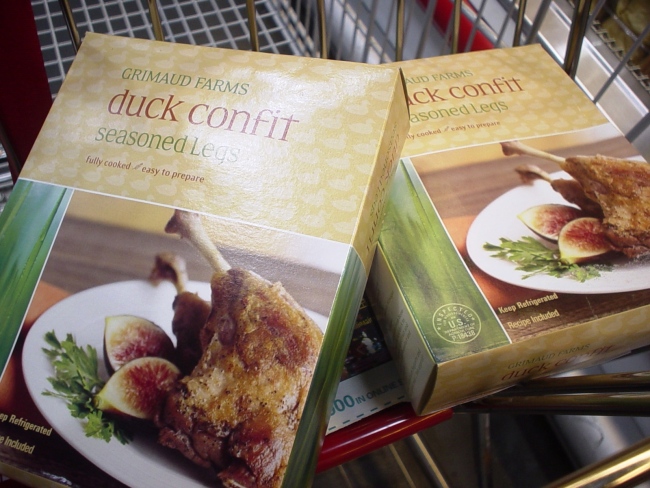
Eat more duck?  I don’t know why we (Americans) don’t eat more duck.  I just had a pan roasted duck breast with coca sauce, served on a bed of lentils with cipollini onions the other day at Citizen Cake here in San Francisco, and throughout the meal I could not stop asking myself why I don’t eat more duck.  I love duck.

Duck has so much more flavor than chicken, and roasted duck fat and crispy skin surpasses that king of fatty delicacies bacon any day.  And, I really love bacon.  But, duck is another realm of sensuous eating pleasure.  Duck is like an affair with an exotic beauty who barely speaks your language.  Bacon is a fling with the hot bartender around the way.

Duck is never mentioned in those poultry scares.  I cannot remember any duck recalls, bans, poisonings, or governmental white papers against it.  The only thing we hear about is the whole foie gras flap.  Is it cruel, or is it not cruel?  If I were a duck I think I would say it is cruel to force me to eat when I do not want to eat, but if I were a duck I would also feel the evolutionary need to stuff myself silly for the long flight South and would feel it even more cruel if my keeper did not feed me all I crave to eat.  Other than that duck is free from controversy (to my limited culinary focused knowledge).

So why do we not eat more duck?  Expense?  Hell yeah, that’s one reason.  Duck is expensive here in the States.  You may give the old chicken purchase the once around the brain and compare it to the cost of hamburger, but duck…that’s a stop and ponder this for awhile purchase.

Availability?  Yeah, that is also a problem in most areas.  You can’t just pop down to the market and pick up a fresh duck or duck breast.  Well, I live in San Francisco, and I can go to Chinatown and have them slaughter the duck of my choice for me.  If I was inclined to do that, and if my Cantonese was up to snuff to get it done. I assure you, I have not and it is not… so relax.  But availability is a problem because the only duck you are going to find is more than likely whole and frozen, and then you have to plan, thaw and wait.  Ok, duck seems really impractical now.

Treatment?  This is the last obstacle I see with duck.  Not the ethical treatment of them; although, that crosses my mind too.  I mean how should you cook it?  Should you butcher it and pan roast or grill the breast, and make confit out of the legs and thighs?  Or, should you break out the bike pump and fan and Peking that sucker?  That’s the dilemma.  

If I was Chef Gary Danko I could turn it into duck breast prosciutto, but there is only one Danko and I am not he.  If I was uber Chef Thomas Keller, I could create some dish out of duck that could revive the dead, but I am not Thomas Keller either.  I am just an ordinary cook who loves duck and cannot get past the Expense, Availability, and Treatment of duck in order to EAT duck.

If I lived in France, I don’t think I would have this problem.  I could buy fresh duck breasts, pay a bit more for it than chicken, go home and pan roast them, and use the rendered duck fat to fry some potatoes.  I could eat duck at will, and then ponder why I don’t eat more pheasant.  I’m still going to try and eat more duck.  

How about you?

Posted
AuthorAntoinne von Rimes
2 CommentsPost a comment
Posted
Authordavid koch
CategoriesLinks
2 CommentsPost a comment

photo by Chris Lightner

My wife Ari and I worked a little later than usual on Friday and both of us had a long week, so we were pretty set on dinner-in.  Went to Whole Foods without knowing what we were going to eat.  Scoping out the seafood section, we spotted some scallops, then checked out the meat department and couldn't resist the Aged Rib Eyes that were staring us down.

Our favorite cut is a Rib Eye - but what was difficult was whether to go with the scallops, or the meat.  Why not Surf & Turf?  We went with both.  We actually bought 2 rib eyes to begin with, but when we got home and saw how much food we had, we quickly realized that 4 scallops (weighing over half a pound) and a single rib eye (almost a pound) was going to be PLENTY of food.

The other Rib Eye is now sitting uncovered on a plate in the fridge and will be turned daily until about Wednesday.  This is a trick I learned from my buddy Sage, but have yet to try.  It is supposed to be awesome.

Browsing the produce section for a bit, we decided to go with a couple large artichokes.  We needed to make a decision quick because Ari's eagle eye had spotted the cheese samples from about 40 yds away...

For the wine, we went with a Pinot Noir since we had both red meat and shellfish on the menu.  Pinots are my "go to" when I'm not sure what to pair with.  You really can't go wrong in my experience.  Of course I'm still learning, so all wine tips are welcomed!

Give the 'chokes' a 20 minute head start in the steamer.  For the scallops, wrap them around with bacon and skewer them with a rosemary sprig.  Set them aside.  Start with heating a heavy cast iron pan (our "go-to" pan) by putting your stove on a medium-high heat.  Once it is hot, sear the first side of the Rib Eye well, about two minutes.  Give it a flip then turn the heat down a notch.

By now the pan should have plenty of juices and the scallops are ready to throw in.  Give the scallops 2-3 minutes on each of the 4 sides to thoroughly cook the bacon.  About 10 minutes total.  When everything is done, flip the steak once more and butter the top to add a little more deliciousness as well as tie in something that you'd usually have with seafood (butter).

When you serve it, put a little extra dab of butter on the other side of the steak as well; that makes for more sauce to dip the scallops in.  Ari whipped up some creamy balsamic to dip the chokes (mayo and balsamic).  The wine had been poured and given time to breath, and we were ready to chow down. Awesome meal, and about half the price of going out - which we usually do on Fridays.


photo by Chris Lightner


Related Posts Widget for Blogs by LinkWithin

Posted
AuthorChris Lightner
CategoriesRecipes

We took an AMAZING trip to Italy last year and through the mastery of Animoto I was able to pull this video out of my pizza oven...  One million "thank you's" to Russ and Avalon Hill for sharing their tuscan villa, Casa Helena, with us - we count the day until we can return...

I hope you enjoy it.

Related Posts Widget for Blogs by LinkWithin
Posted
Authordavid koch
CategoriesVideos
Tagsvideo
2 CommentsPost a comment

16 Ingredients: water, concentrated crushed tomatoes, onions, jalapeno peppers, distilled vinegar, green bell peppers, salt, high fructose corn syrup, xanthan gum, sodium benzoate and potassium sorbate as preservatives, citric acid, chili powder, natural flavor, garlic, spice.


I'll have to say, there ARE 5 vegetables in here; however, there are also 3 chemicals that are both mysterious and difficult to pronounce. Let's review some of these chemicals (content is from wikipedia):

Xanthan gumis a polysaccharide used as a food additive and rheology modifier. It is produced by fermentationof glucose or sucrose by the Xanthomonas campestris bacterium.

Sodium benzoate - also called benzoate of soda, has thechemical formulaNaC6H5CO2.  It is the sodium salt of benzoic acid and exists in this form when dissolved inwater. It can be produced by reacting sodium hydroxide with benzoic acid.

Potassium sorbate - the potassium salt of sorbic acid.  Its primary use is as a food preservative.  Potassium sorbate is effective in a variety of applications including food, wine, and personal care.


In case you were wondering, no, the stuff doesn't taste very good.

Related Posts Widget for Blogs by LinkWithin
Posted
Authordavid koch
2 CommentsPost a comment

Summer is just around the bend, and the smell of early evening BBQs (or as some of you say ‘cook-outs’), in the air is already abound. Good people, good food, good beverages, good times. While there always must be a meat, or a variety thereof to make a great BBQ, I love the sides, and one of my favorites is chili accompanied by cornbread.

It most recently reminds me of a 4thof July BBQ at my old greasy spoon house—no offense guys—on Bay Street in San Francisco, a fun day indeed!

Chili and cornbread for a BBQ you say? Yes, and here is why. It’s the perfect side for all of your favorite meats OR vegetables. Slathering chili on your burger or hotdog immediately adds a tremendous amount of texture and flavor, and if you stock up on some small bowls, it also makes a great starter.

A pot of chili can easily stay warm if you have a burner on your grill, or even in a closed container outside. Some of you might eat cornbread with the chili, but it can also serve as a desert, which is what I prefer. Nothing better than hot cornbread slathered in butter and honey. “More please!”

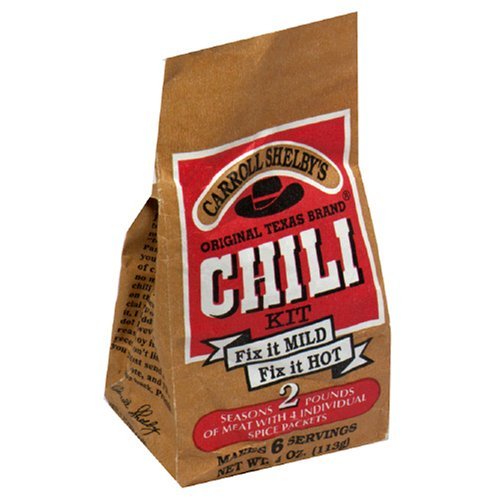
My favorite recipe for chili comes from my mother Pam "Pamcake" Wilkinson, who still makes chili every once-in-awhile when I come home and visit—especially for me. And for all of you folks like me who sometimes take the easy route in cooking, Mrs. Wilkinson’s specially-kept-unrevealed-until- today secret makes it a painless process—Carroll Shelby’s Original Texas Brand Chili Kit.

And just like the saying goes, good things come in small packages, the only thing I’d add to that is, sometimes in small brown packages (as shown below). Carroll Shelby’s is usually available at your local grocery store, or you can order it online.

Carroll Shelby's Original Texas Style Chili

Ingredients

  • 2 pounds ground beef
  • 1 8-ounce can tomato sauce
  • 2 cups water
  • 1 package Carroll Shelby's Chili Kit (contains all of the essentials below):
    • -1 chili packet for seasoning
    • -1 packet of cayenne pepper
    • -1 packet of salt
    • -1 packet of masa flour for thickness

Option to add beans (I always do, and prefer white beans, although a can of kidney would work as well)

For chunkier chili, feel free to add canned tomatoes to taste


Instructions

Brown ground beef in large skillet. Drain fat. Add tomato sauce and water. Add Large Spice Packet and salt to taste. For spicier chili, add cayenne pepper (small red packet*). Cover and simmer for 45 minutes, stirring occasionally. Serve piping hot. Makes 5 servings.

*I like spice, so I always heat it up with the cayenne pepper

Hey history buffs, there actually is a Carol Shelby, and he’s a former race car driver that had a chili recipe named after him. If only we could all be so lucky.

And for all of you that are counting your calories, which I sure as heck should be, you can find calories and nutritional information here.

Other useful links:

International Chili Society

Chili Appreciation Society International

Chilicon carne - Wikipedia, the free encyclopedia

chili: Food Network

Red Hot Chili Peppers Online

snopes.com: Finger in Wendy's Chili

Posted
AuthorMichaela Wilkinson
CategoriesRecipes
3 CommentsPost a comment

Several years ago, Papawow founder and foodtellectual extraordinaire Dave Koch loaned me a copy of Tampopo, the 1985 Japanese Western/comedy about, well, noodles.  I’m sure he meant well, but Tampopo ruined noodles.

I must admit that I haven’t seen Tampopo for many years now, so the details are a bit hazy.  The essence of the movie is the woman Tampopo’s search for the perfect bowl of noodles.  Various scenes describe the essence of a good bowl of noodles.  It all starts with the broth. Having made broths, stocks, and soups before, I am fully aware of the time consuming process required to make a deliciously savory, but not-too-salty broth.

The noodles themselves are another critical component – be they udon, ramen, soba (generally reserved for cold soups) or another lesser variety, the noodles cannot be overly mushy or hard.  They need to withstand the heat of the broth and the prodding of the eating implements (never a fork) without giving in, and at the same time cede to the tooth with a tiny bit of elastic resistance.

And then there’s the meat.  I have had too many udons containing an overly fatty, thick piece of ham. I’ve had tempura prawns with instantly-dissolving panko, revealing naked crustaceans in a slurry of fry.  Unacceptable.

The problem with Tampopo is that it leaves the viewer craving the perfect bowl of noodles.  I have not, in the years since my viewing of Tampopo, achieved satisfaction.  Unfortunately, my noodle experiences since that defining moment have left much to be desired.

Five minutes prior to writing these words, I consumed a bowl of noodles with dumplings – purveyor to remain anonymous – that left me craving something more substantial.  The dumplings tasted like poultry seasoning without the poultry.  The broth was empty, want of seasoning and excitement. And the noodles were flat, lacking personality.

One peculiarity of this vendor, which I have visited previously, is the over-abundance of vegetables in the soup. Rather than meat or fish broth, I end up tasting only carrots and sprouts.  Today’s noodle dish was merely a ghost of something that could have been.

Perhaps my disappointment in noodles is a regional problem.  I have not had a decent opportunity to sample noodles in Asia since my search began.  The exception was a disappointing ramen bowl in the Singapore Airlines lounge of the Hong Kong airport.

Incidentally, the best noodles I had since Tampopo were from a Japanese restaurant in the San Francisco International Airport.  I have spent many hung-over Sundays burning my tongue in a bowl of udon before departing to another place.  The broth there is particularly invigorating, and it magically warms my body and alleviates my ailments.

The tempura shrimp often end up naked, but with the appropriate level of care one can negotiate panko and crustacean in the same bite.  Despite the positive aspects of this airport miracle, it is still miles away from satiating my craving.

Tampopo initiated my search for the perfect bowl of noodles, and coupled with my search lays ceaseless disappointment.  One day, I optimistically muse, my search will prove fruitful.  Until then, noodles are ruined.

Tampopo in London

I stopped in my tracks one day when, walking down Fulham Road in London, I came upon a restaurant called Tampopo (www.tampopo.co.uk).  What a clever name for an Asian restaurant, I thought, but Tampopo herself would not have been pleased; this is not a noodle shack focused on the perfect bowl of noodles.

Instead it is a multi-location Asian restaurant, serving “steaming noodles to soothe, slow-cooked curries and sizzling stir-fries full of goodness and flavour.”  Sounds like goodness to me, but it does not sound like the end to Tampopo’s – or my – quest.


Posted
AuthorLoren Tama
CategoriesHistory, Humor

photo by Antoinne von Rimes

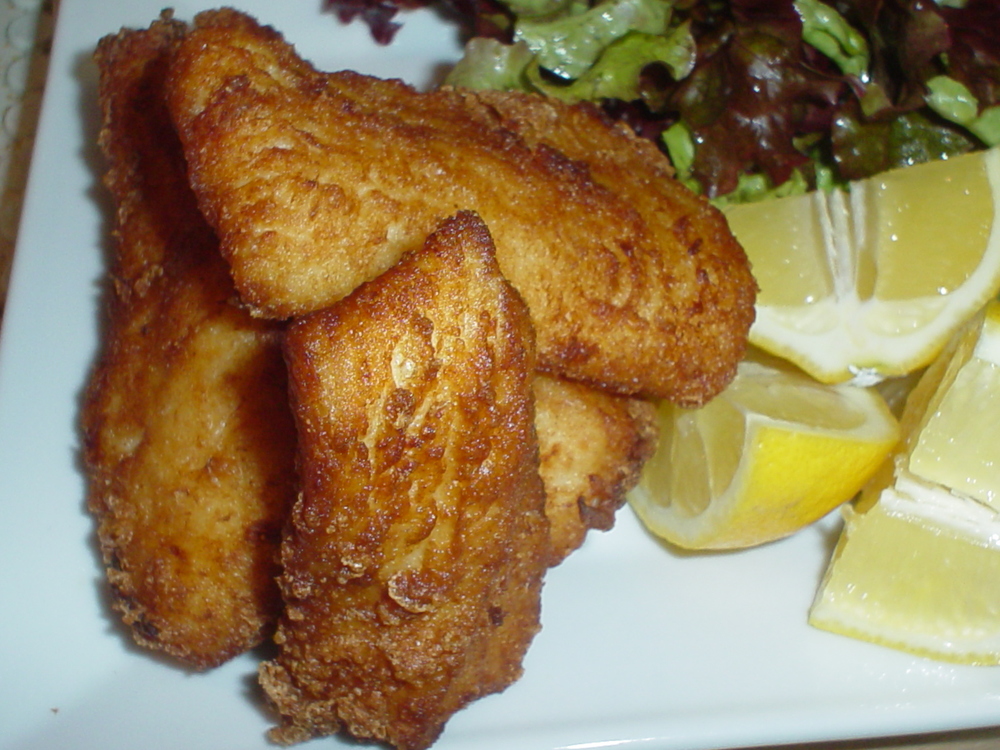
Halibut, I love Halibut so much that I eat it three to four days a week when it’s in season, and thank God it is back in season now. Halibut season runs from March until the middle of November.  The span in-between I call hell because I am deprived of the luscious white, sweet, meaty treat called halibut.

I live in San Francisco and people here go on and on about salmon and Dungeness crab, ad infinitum…ho-freaking-hum.  There is no salmon dish baked, roasted, steamed or raw that can come close to a basket of properly beer battered, deep fried, halibut.

The crisp, crunchy, golden brown exterior and the steaming hot tender fish inside is food porn to me.  I want to close the blinds, conceal myself from prying eyes while I give myself over to this unmatched sin.

A drop of lemon or lime juice with the first bite, and then a dollop of my homemade tartar sauce with the second, and I’m half way to being spent.  My deep fried Halibut is crisp and golden brown on the outside with white, nearly, luminescent flesh, shrouded in a mist of escaping steam on the inside.

My mouth knows it will be tender and sweet. It seduces me to take a bite. I bite, munch, and gorge.  Before I know it, I end the evening sprawled on my couch, flakes of fried batter clinging to my face.  A sudden rush of guilt washes over me…shame not too far behind.  I pick myself up and tell myself I will have more self control next time…tomorrow


Posted
AuthorAntoinne von Rimes
CategoriesHumor, Recipes
4 CommentsPost a comment
Posted
Authordavid koch
CategoriesLinks

photo by Amy Koch

A fresh, simple, yet impressive dish for you and your loved one, or for entertaining guests.  The beauty is in its simplicity; you only need 8 ingredients.  This also takes less than a half hour to complete so you'll have more time to spend with the people you are with.

I made this to submit to SippitySup's Tomatomania contest.  Oh!  Be sure to use a white a wine that you will drink with it because you only need a little bit for the sauce.  

Ingredients:

· ½ pound of medium shrimp, 12-15 shelled and deveined

· 3 large slicer tomatoes concasséd (peeled, seeded, and chopped)

· 2 cloves garlic minced

· ¼ cup basil, chiffonade

· 6 ounces linguine

· 2 tablespoons olive oil

· Juice of half a lemon

· 2 tablespoons of dry white wine

· Salt & pepper, to taste

Instructions:

Heat 1 tablespoon of olive oil in sauté pan, add minced garlic, sauté for 30 seconds. Add concassé of tomatoes. Sauté for 3-5 minutes until tomatoes begin break down, then add 2 tablespoons of the white wine plus 1 teaspoon of salt and let simmer for 10-15 minutes.

Meanwhile, bring a large pot of water to boil for the pasta and cook according to the box’s instructions. In another pan, heat additional 1 tablespoon of olive oil, season shrimp with salt and pepper, and sear for 1 minute each side, squeeze lemon juice over shrimp, then add them to the tomato sauce. Let simmer in sauce for an additional 2 minutes to finish cooking.

Toss noodles with sauce and basil. Enjoy!

Serves 2.


Posted
AuthorAmy Koch
CategoriesRecipes
4 CommentsPost a comment

photo by Dave Koch

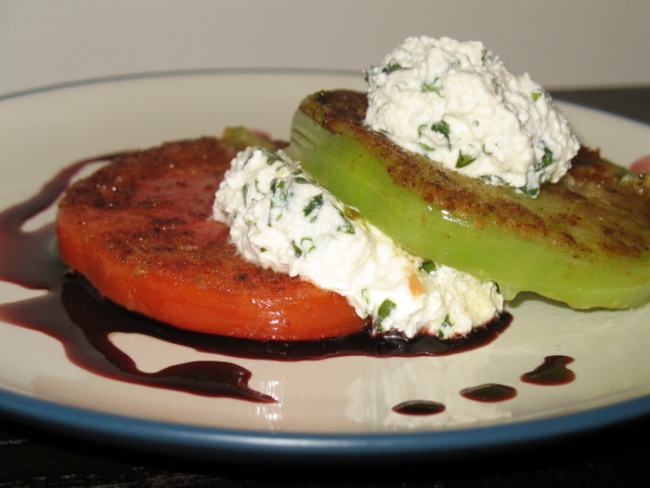
We saw some really nice heirloom tomatoes at our Whole Foods the other day (we also saw San Francisco's Mayor, Gavin Newsom but that's another story) - and SippitySup's tomatomania contest was fresh in my head.  I came up with this recipe thinking about putting a new twist on the ubiquitous caprese salad.

By breading and frying the tomatoes, you get a little crunch, and their sugars begin to caramelize. Their natural sweetness is enhanced by the honey in the reduction and the acidity adds a POP that would otherwise be missing with only the cheese, basil, and tomatoes.

The key to pulling this off, is mise en place; getting everything set so that you can plate it in a jiffy, serve, and eat while it's still piping hot. Once you begin to cook the tomatoes, they’ll start to break down, so work quickly. Half the texture is in keeping a little bite to the tomatoes to contrast with the soft cheese.

Ingredients:

· 2 nice heirloom tomatoes, a red and a green preferably
· 1 cup of ricotta, I used "part skim"
· 1/4 cup of basil, minced fine
· 1/4 cup flour
· 1/4 cup bread crumbs
· 1/4 Parmesan cheese, grated
· Salt & pepper
· 1 cup red wine vinegar (homemade is best!)
· 1 tablespoon honey
· 2 tablespoons olive oil
· 2 tablespoons butter


Instructions:

Begin by reducing the red wine vinegar with the honey in a small pot over medium heat, this step will take the longest.  Mix your basil and the ricotta in a bowl.  Slice the tomatoes about 1/2 inch thick, thicker slices hold up better and are less likely to fall apart.

Combine the flour, bread crumbs, and the Parmesan cheese on a large plate so that you can dip the tomato slices into it easily.  Be sure to season the bread crumb mixture well with salt and pepper, about a tablespoon of each. It may seem like a lot, but not all of it will stick to the tomatoes.

I recommend a non-stick pan for this because the breading is likely to separate from the tomato otherwise.  Add a tablespoon each of the olive oil and the butter to the pan, and put on medium-high heat - you are not supposed to heat a non-stick pan dry. Once the butter begins to foam, quickly dip the tomatoes into the breading so that you get an even coat on both sides (don't do this ahead of time or you will make glue).  Place into the pan.

Fry until GBnD (Golden Brown and Delicious), about 2 minutes on each side.  Place one tomato slice on the plate, add a dollop of basil ricotta on top, then the other slice of tomato, then another dollop of ricotta.  Spoon a drizzle of the vinegar reduction around the sides.  Serve immediately.

Makes enough for 2.


Posted
Authordavid koch
CategoriesRecipes
3 CommentsPost a comment
Posted
Authordavid koch
CategoriesLinks

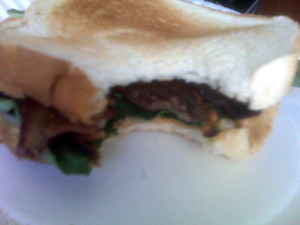
The B-PB-B!.  Kind of a shoddy photo for such a delicious sandwich (it was taken with my phone) but the muses were with me when I came up with it.

I know it sounds crazy but don't laugh until you try it!

The saltiness of the bacon and the saltiness of the peanut butter play nice together on the swings while the basil is is busy getting dizzy on the carousel.

There is creamy, crunchy, salty, and herbal all going on.  White bread allows all the flavors to shine but whole wheat would be good too.

Ingredients:

3 strips of bacon - baked, nuked, or fried

2 pieces of white bread, toasted

1 small handful of basil, about 6 large leaves

1 smathering of peanut butter - chunky or smooth, your call

Instructions:

Put everything in between the slices of bread.  Eat.

Posted
Authordavid koch
CategoriesHumor, Recipes

photo by Dave Koch

The weather is warming up, the birds are singing, and the avocados are calling my name.  It is the beginning of guacamole season; that beautiful time of year where people gather around a molcajete with a cerveza in one hand and a tortilla chip in the other, jockeying for position to get the very best scoop.

Some people are looking for the biggest chunk of avocado, that somehow avoided being pulverized.  Some are looking for a particularly large dice of tomato.  Some poor saps are trying to find a smedge with no clear signs of cilantro, because they live their entire sorry existence in fear of biting into one of its pungent leaves.

In any case, I'm a guacamole freak.  If I found a big swimming pool filled with the stuff, I would be compelled to dive in.  I make a mean guac.  I make the kind that sings babies to sleep.  I make a guac that people write songs about.  My guac makes recent widowers momentarily forget to moarn.  It makes rap-stars write lyrics like, "My guacamole brings all the boys to the yard."

Unfortunately when dining out, I am all too often disappointed.  There's too much fluff, too much filler, too much salsa (if you're calling it guac, it's guac, not salsa with avocado - which is good, but it's not guac).  Sometimes there's onion powder, or garlic powder, or cumin; or worse yet a combination of the three.  Sometimes the color is off, it's green but it's awry - it's not natural, back away!

Too often I catch myself saying "hold the guac," not because I don't like guac, I love it, but because I like it so much, that I don't trust it in your hands...  I feel compelled so often to explain - but that can get confusing.  I can tell by the way you are moving your lips while you read this, you're about to taze my guac.  Don't taze my guac bro.  This is how it's done:


Don't Taze My Guac

Ingredients: 

  • 4 Avocados, Haas are great but if you can find other varieties like the Bacon and the Fuerte, branch out
  • 1/3 cup lime juice, about the juice of 2 limes, 3 if you're not getting much out of them
  • 1/2 an onion, diced
  • 3 tomatos, diced
  • 1/4 cup of cilantro, coarsly chopped
  • 1 tablespoon of salt
  • 1/2 tablespoon of black pepper
  • 1 serrano or jalapeno, minced, is OK but not necessary

Instructions:

Open a fine Mexican beer.  Lo ciento novato, pero Corona y Tecate don't count.  Try Negro Modelo, Bohemia, or even Pacifico.  Cut a slice out of one of your limes, insert into beer.  Throw all your ingredients into a bowl (not the beer, keep the beer in your hand).  Mix together, but not too well.  

If you want to make this ahead of time, go ahead, but squirt more lime juice on top and then cover with plastic wrap.  Oxygen will turn the avocado brown and acid prevents this (just like apples).

Enjoy.


Lastly I'll leave you with a hilarious tribute song to the green (although we disagree somewhat on the accoutrements), "Some add in serrano, some like jalapeno, don't make it to hot though, when serving it to gringos" 


Posted
Authordavid koch
CategoriesRecipes
4 CommentsPost a comment

photo by Dave Koch

Confit is a very old method of preserving, the word confit in fact comes from confire which means "to prepare."  It most often recognized as confit of goose (confit d'oie) or duck (confit de canard) but the principles are similar no matter what you are preparing.  In the case of meat, you cook the meat in its own fat and a hefty amount of salt, and it is stored that way - stored in the fat because as it cools, it solidifies.

For fruit; however, it is sugar that drives out the moisture, not cooking with fat.  Thanks to friends of ours, we have an abundance of lemons right now and preserving them was going to be the only way from preventing them all to spoil.

This is an adaptation of Tom Colicchio's Lemon Confit from his book Think Like a Chef.


Ingredients: 

  • Lemons, lots of them - for the amounts below, use a dozen
  • 3 Shallots
  • 8 cloves Garlic
  • 2/3 cup Salt
  • 1/3 cup Sugar
  • Olive oil, a few cups

Instructions:

Blanch the lemons by dropping them into boiling water for about thirty seconds.  This removes any wax they might have been sprayed with, and should kill any mold spores.  Wipe clean and slice thin.  You could use a mandolin, but we weren't too picky so we used a knife.  

Mix the sugar and salt, put into a bowl.  Mince the shallots and the garlic fine, combine.  

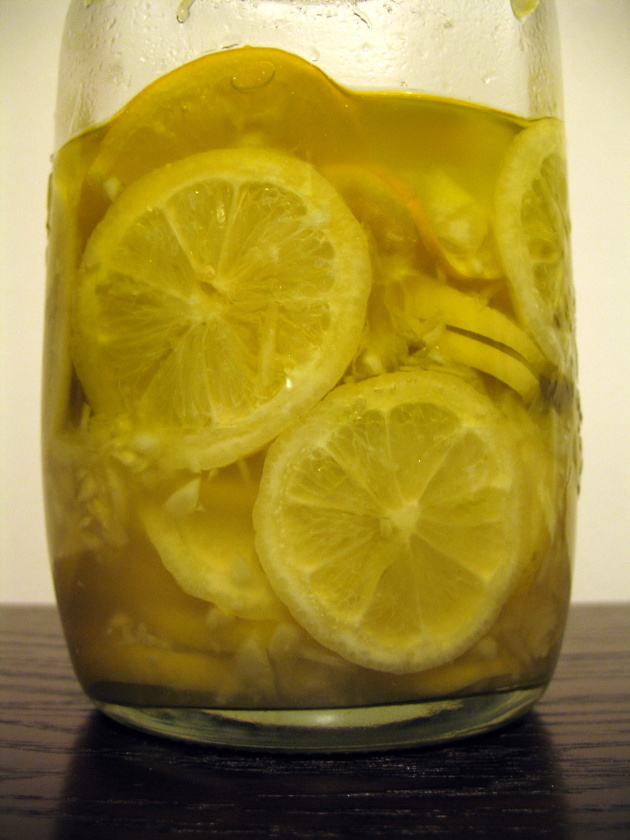
Place a layer of the lemon slices at the bottom of a container, glass is best.  (We made this at a friends house so there are pictures of a Tupperware, but we transferred them into a glass jar when we got home).  

Following the layer of lemons, sprinkle some of the salt/sugar mixture, and then some of the shallot/garlic mixture.  Repeat until you run out: lemons, salt/sugar, shallot/garlic.  

Lightly pat down everything, we used a wooden spoon, and add olive oil until everything is covered and not exposed to air.  Make sure your container has a lid, put that on too.

Leave at room temperature for three days then place in the refridgerator.  They will keep for up to three months.  

Use in chicken, fish, or veggie dishes to add zest and color.  The acid and garlic supposedly mellow out and meld together with time.  Lemon confit and otherwise preserved lemons are common ingredients in Moroccan and Middle Eastern recipes, but I'll bet will make a fantastic condiment to almost anything.


Posted
Authordavid koch
CategoriesRecipes
4 CommentsPost a comment

photo by Dave Koch

Also known as Jerusalem Artichokes, you can make Sunchokes into a quick, easy, and delicious soup in about 15 minutes.  Interestingly enough, Sunchokes are native to North America and are one of the continent's only tubers.  When they bloom, their flower looks much like a small Sunflower.  

The name Jerusalem artichoke is from the Italian name Girasole articicco (Sunflower Artichoke) because of their plumage and because the first group of Italians to snack on them thought they tasted like artichokes.  When the name came back to the New World, Americans had difficulty saying Girasole and thus converted it to Jerusalem.

And now back to the soup.  In full disclosure, these were the first Sunchokes I have had.  I peeled them, cut off a little piece to eat raw, and was blown away by how sweet they were.  My first thought was how tasty they would be raw in a salad, much like Jicama - maybe next time, soup was already in the works...


Ingredients:

  • 1/2 pound of Sunchokes, peeled and diced 
  • 2 small carrots, or one giant one, diced
  • 2 ribs of celery, diced
  • 1 tablespoon of chicken or veggie bouillon, I like the brand Better than Bouillon  
  • 4 cups water
  • Olive oil
  • Salt & pepper


Instructions:

In a medium/hot pan, add a tablespoon of olive oil, the carrots, celery, and the sunchokes.  Season well with salt & pepper and sauté until soft, about 5 minutes.  When they yield easily to being prodded with a fork, add the water and the bouillon and bring to a boil.  

Hold the boil for 5 minutes, and when complete, blend thoroughly with an emersion blender (or transfer to a traditional blender in batches).  I garnished with a dollop of yogurt, a drizzle of olive oil, and a few squirts of Sriracha Hot Sauce.

Enjoy!

Posted
Authordavid koch
CategoriesRecipes
2 CommentsPost a comment

photo by Dave Koch

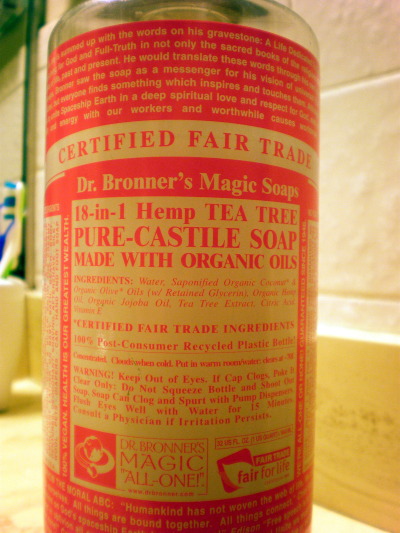
We use a lot of soap in our house and I've always been a fan of Dr. Bronner's Magic Pure Castile Soap but the huge squirt bottle kind of sucks.  Really.  What I discovered recently is that the magic really occurs when you dilute it into a foaming hand soap pump.

Well, you've got to wash your hands, and you've always got dishes to do... so why not do them the Magic Pure Castile way?

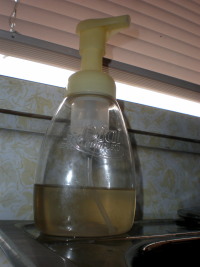
Begin with a fancy foaming hand pump soap, we use Dial [don't you wish everyone did...?]  


Use it up.

photo by Dave Koch


I grew up on the stuff, usually the Peppermint scent.  It works great for cutting grease on dishes and it doesn't do a nasty toll on your "dish-pan" hands.  Unfortunately, it never has had a decent delivery system - until I tried putting it into foaming hand soap pumps.  Now it is complete.


We have used the Peppermint, the Lavender, and the Tea Tree Oil.  I even added a little Tee Tree Oil that I had sitting around to each batch.  Why not?  

photo by dave Koch

For each, add a small squirt (maybe an ounce or so) to the soap bottle, fill the rest up with water, cap it and you're done.  

I'm not the cheapest bastard in the the bunch but let's do the math:

A 32 ounce bottle of Dr. Bronner's costs $15 and will make about 20 batches of hand soap.  That's about 75 cents per batch and I swear it works as good as - or better than the stuff you have laying around.

Give it whirl!  I'm going to try the Rose or the Eucalyptus next...

Posted
Authordavid koch
CategoriesScience
3 CommentsPost a comment